
You only get one first operation.
If this were my family, these are the questions I would ask before choosing a bariatric surgeon or clinic — starting with the three that matter more than everything else combined.
Clinic websites all use the same reassuring words. Three questions cut through them fastest: who actually owns and runs the clinic, whether they’ll let you talk to their patients before you book, and whether your surgeon is a true bariatric subspecialist.
Written by Dr. Scott Gmora, bariatric surgeon and sleeve patient · No rankings · No paid placements
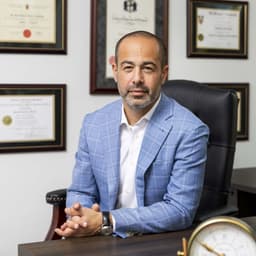
And a sleeve patient himself.
The three questions that matter most
There are a dozen good questions to ask a bariatric clinic — they’re all below, and they all earn their place. But these three do more work than the rest combined. If a clinic stumbles here, nothing else on the list will save it.
Is this clinic owned and run by a bariatric surgeon?
A growing number of clinics are owned by business people — investors who hire a surgeon to come in, operate, and leave. A clinician answers to their College with every patient. A business owner answers to no College at all. And if the owner isn’t your surgeon, ask the question clinics hope you never think of: does my surgeon work here full-time — or case-by-case?
Medical practices need to be run by medical doctors — preferably by specialists in obesity medicine. The reason is accountability, not ego. A clinician’s name, licence and reputation are on the line with every single patient. A business owner carries none of that. No College. No Hippocratic Oath.
In my experience, that difference shows up exactly where you can’t afford it: a sleeve recommended when it isn’t the right operation, a high-risk case that should have been declined, corners quietly cut in the name of margin. When the person with final authority has no clinical accountability, the pressure runs the wrong way.
“Is this clinic owned by the surgeon who will be doing my surgery?” And if not: “Does my surgeon work here full-time — or are they hired on an as-needed basis?” A per-case surgeon operates and leaves — and someone else entirely owns your recovery.
Will they let you talk to their patients — before you book?
On a phone call, any clinic can offer you the moon — and “talk to a past patient” gets you their happiest one. Ask to join their unfiltered patient community before you book. It’s the only reference that can’t be staged, and the only reliable way to see what the aftercare actually looks like. If they won’t let you in until after surgery — or there is no community at all — run in the opposite direction.
Once you’re inside, ask real people, in the open: Did this clinic deliver what it promised? Were you supported when it got hard? Did anyone chase you when you went quiet — or were you the one doing the chasing?
Because here’s the truth about aftercare claims: booking appointments for the first few months and then saying “call us if you have questions” is not aftercare. Real aftercare means you are followed, tracked and held accountable — someone notices when you miss an appointment, and you don’t get let off the hook. More and more clinics claim this. The only reliable way to know is to ask the people already living it.
“Can I join your patient community now, before I decide?” A confident clinic says yes on the spot — and inside you find a large, active group where patients speak freely. A small, silent group is its own answer.
Is your surgeon a true bariatric subspecialist — or a dabbler?
Letters after a name won’t tell you who is qualified. A true subspecialist regularly performs every bariatric operation — bypass, duodenal switch and revisions, not just sleeves. And in Canada there’s a shortcut that’s very hard to fake: does the surgeon regularly perform bariatric surgery in the public hospital system? If the answer is no, that’s a major red flag.
This matters for two very practical reasons. A sleeve-only surgeon can’t give you honest advice about which operation you should have — if the only tool on the menu is a sleeve, a sleeve is what you’ll be prescribed. And they can’t manage the surgical problems that can follow one. (Removing old lap-bands doesn’t count as revisional surgery.)
Training also has a shelf life. A bariatric fellowship completed twenty years ago, without weekly bariatric practice since, is not, in my opinion, a bariatric surgeon. You want both halves: a named, accredited fellowship in bariatric surgery specifically — and present-tense volume.
“Do you regularly perform gastric bypass, duodenal switch and revisional surgery — and do you operate in the public system?” Two questions, thirty seconds, and you’ll know exactly what kind of surgeon you’re talking to.
Eleven questions. Ask them in this order.
The three above lead the list — eight more finish the job. Open each one for what a strong answer sounds like, what a weak one sounds like, and why it matters. Then take the printable checklist to your consultations — all fourteen questions, with a checkbox and room to write down what you actually heard.
“The clinic is owned and led by your surgeon — he's here full-time, and he's the person you'll see at your consult and at every follow-up.”
“We have an excellent medical director.” / “Our surgeons are all highly qualified.” Neither answers who owns the clinic — or whether your surgeon works there at all.
“Yes — we'll add you today.” And inside you find a large, active group where patients speak freely and the answers aren't curated.
“The group is for post-op patients only.” / “We can connect you with a patient ambassador.” / There is no group at all.
Full range, performed regularly — plus a named hospital where they operate in the public system, said without hesitation.
“We specialize exclusively in the sleeve.” / “My practice is fully private now.” One item on the menu, and no peers watching.
A personal career number, a number for your specific procedure, and a recent-years number — with the surgeon distinguishing their own cases from the clinic's unprompted.
“Our center has performed thousands of procedures.” The center isn't operating on you.
A direct figure with its context — “X returns out of Y operations over Z years” — offered like someone who knows their own data cold.
A lecture about how all surgery carries risk, a pivot to happy patients, or “we don't really track that.”
A clinic built around obesity care — where any cosmetic relationship sits downstream of the weight loss, not the other way around.
A cosmetic surgery menu with a weight-loss tab: injections, balloons, and a surgeon who visits.
An emergency line, answered — with a clear path to the operating surgeon, any hour, and a team that has walked patients through this before.
Office hours, a voicemail, and “if it's urgent, just go to emergency.”
A named accredited bariatric fellowship, a year, an institution — and weekly bariatric practice today.
An adjacent fellowship presented as equivalent, or “extensive advanced laparoscopic training” with no bariatric specifics.
A surgeon who does follow-ups personally, talks comfortably about food addiction, psychology and nutrition — and is reachable after surgery.
“The team handles all the aftercare.” Translation: you will never see the surgeon again.
Specifics about years, not months — who you'll see, how often, and what happens when a patient goes quiet. And patients in the group confirm it.
“We're always here for you — just reach out anytime.” A warm description of an unlocked door with nobody behind it.
One vague answer means nothing. A pattern means everything.
Nobody will say who owns the clinic
Or the answer changes depending on who you ask.
The surgeon is hired case-by-case
He operates and leaves. Someone else owns your recovery.
The patient group is closed until after surgery
You can hear from patients — once you've paid.
There is no patient community at all
Or it exists, but it's small and silent.
The surgeon only performs sleeves
One operation on the menu — and you're getting it.
No bariatric practice in the public system
In Canada, that's a question worth asking twice.
A cosmetic clinic with a weight-loss tab
Tummy tucks and liposuction do not treat obesity.
Clinic numbers passed off as the surgeon's
“Our center has performed thousands.” The center isn't operating on you.
The only emergency plan is “go to the ER”
With no path that reaches your surgeon.
Aftercare means a few months of appointments
Then “call us if you need anything.” That's not aftercare.
Nobody notices when patients disappear
No outreach, no accountability, no follow-up program.
Careful questions read as distrust
The best programs treat diligence as a good sign. Genuinely.
Listen to your heart. It already knows.
After every question on this page — the numbers, the credentials, the checklists — there is one thing left to do, and it matters more than all of it. Sit across from the person who wants to perform your surgery, and pay attention to what you feel. You have earned that instinct the hard way. You have spent years listening to people talk about your weight, some with kindness and many without, and you know better than almost anyone the difference between someone who is truly listening and someone who is simply waiting for you to say yes.
So ask yourself the quiet question: does this person get it? Do they understand what carrying this weight has actually cost you, in all the ways that never made it into a chart? Do you feel judged, even slightly — or do you feel, maybe for the first time in a long while, understood? Do they talk about obesity like something they read in a textbook — or like something they know deeply, because they have walked through it with thousands of patients, or because they have struggled with it themselves? It can mean many things. But you are not hiring a technician. You are choosing the person who will stand beside you while you change your life.
And then listen to your heart. If, when you stand up to leave, there is a nagging feeling — even a small one — that this person cares more about selling a surgery than about helping you change your life, then there is nothing else to consider and nothing more to discuss. Turn around and walk out. Your heart already knows.
After every question on this page, sit across from the person who wants to perform your surgery — and pay attention to what you feel. You’ve spent years listening to people talk about your weight. You know the difference between someone who truly listens and someone waiting for you to say yes.
So ask the quiet question: does this person get it? Not the operation — you. Do you feel judged — or understood, maybe for the first time in a long while? You are not hiring a technician. You are choosing the person who will stand beside you while you change your life.
And if any part of you senses they care more about selling a surgery than helping you change your life — there is nothing more to discuss. Turn around and walk out. Your heart already knows.
Now ask us the same questions.
A guide like this should apply to its author. Here are our answers to the big three — and to the rest of the list. Don’t take any of them on faith.
Ask our patients, not us.
We run a private community of past Sleeve Clinic patients — and prospective patients are welcome inside before they book anything. Ask, unfiltered, whether we deliver what this page claims: who chased whom, what month nine looked like, whether anyone noticed when they went quiet.
Ask Mandy for access on your first call.

MD, FRCSC, FACS
Fellowship, Columbia University
Associate Professor of Surgery, McMaster University
Senior Staff Surgeon, St. Joseph’s Healthcare Hamilton
And a sleeve patient himself.
I’ve made this decision from both chairs.
I’ve spent nineteen years performing this operation and teaching it to the surgeons who will do it after me. I also had a sleeve myself — so I know what it is to sit on the other side of the desk, hoping you’re asking the right questions.
And I know how hard it is for a non-surgeon to tell who is qualified. Letters after a name won’t do it. Polished websites won’t do it. Who owns the clinic, whether their patients will talk to you freely, and whether the surgeon is a true subspecialist — that will do it.
You may choose us. You may choose someone closer to home. Honestly — either way, I will sleep fine. The people I lose sleep over are the ones who chose in a hurry — a discount, a confident pitch, a deposit — and discovered in year two what they had actually bought. So take your time. Ask every question on this page, and never apologize for a single one of them. Anyone worth trusting with your life will be glad you asked.
Bring your questions. We will answer them directly.
Work through your list with Mandy, our program advisor — including the uncomfortable ones. And ask her for access to the patient group before you decide anything, so you can put the same questions to people who’ve already been through it.
Or call us directly: 905-276-5999 · Financing available from $370/month
The printable checklist has all fourteen questions — print it and bring it to every consultation.