
Why Am I Not Losing Weight On Ozempic?
Medically reviewed by Dr. Scott Gmora, MD, FRCSC, FACSLast reviewed
As a weight loss surgeon who’s had weight loss surgery, I’ve tried every weight loss touted solution, Ozempic included. When I talk to my sleeve surgery patients about Ozempic, most of whom have tried it prior to their surgery, the number one question I get is: “Why am I not losing weight on Ozempic?” Let me lay it out plainly: I’ve lived the Ozempic journey, not just prescribed it. Even on Ozempic, I’ve eventually felt that gnawing hunger, I’ve still had those cravings. Contrary to popular belief, it’s not just about curbing the appetite. Feeling full doesn’t necessarily switch off the desire to eat more. Look at it like this - when it comes to being overweight renowned obesity experts are quick to point fingers at faulty appetite regulation. But in my own journey before surgery, even after a satisfying meal, the cravings didn’t pack their bags and leave. The fullness was there, but so was the urge to eat more. So, where does this leave us? Why don’t many patients see the weight loss they hoped for on Ozempic? In this article, let’s cut through the clinical chatter and zoom in on the unspoken, the aspects of Ozempic that don’t make it to the headlines. And, spoiler alert, we’ll also be lifting the veil on why sleeve surgery might just be the game-changer you're looking for when it comes to real, life-changing and sustainable weight loss - it was for me.
Key Takeaways:
Ozempic Overview: Ozempic, primarily designed for type 2 diabetes, has made headlines for its weight loss potential. Yet, like other medications, it’s effects are often modest success and can come with a range of side effects.
Beyond Appetite Suppression: While Ozempic does work by mimicking natural appetite-regulating hormones, many patients don’t feel that curbing of appetite and it certainly doesn't address the deep-rooted causes of obesity. The effects often come with time in my experience.
Surgical Solution's Edge: When the goal is transformative, lasting weight loss, weight loss surgery, especially sleeve surgery, proves to be a more encompassing and effective solution compared to medications like Ozempic.
What is Ozempic?
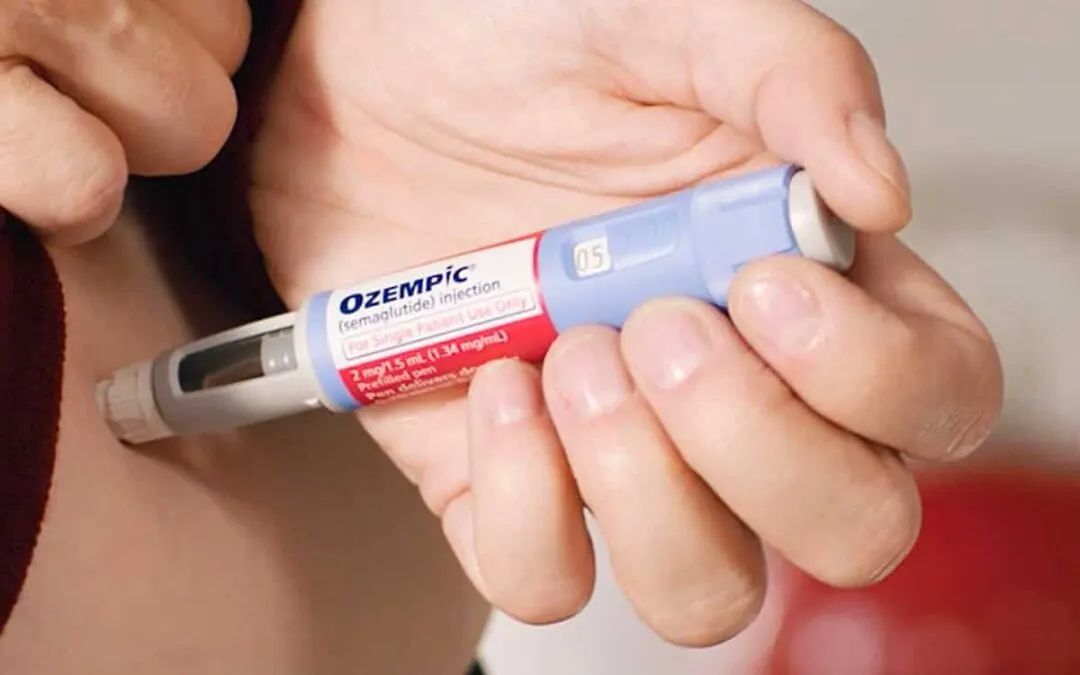
Ozempic, or semaglutide, is an injectable prescription medication known for its abilities to manage blood sugar levels and it’s rising in popularity because it offers the side bonus of weight loss. Engineered to mimic the functions of the natural hormone GLP-1 (glucagon-like peptide-1), Ozempic curtails the appetite and slows down the journey of food through the digestive system. Sounds promising, right? But there's a broader picture to paint here. Let’s dip into expectations vs. reality for a moment. Clinical trials shower Ozempic with praise, flaunting an average weight loss of around 5-10% of the initial body weight. However, it's crucial to brace for a reality where scales don't always tip as dramatically as anticipated. Navigating the Ozempic journey myself, it wasn't a complete silencing of hunger. Instead, think of it more as a temporary turning down the volume on your appetite. The cravings? Still there, just a bit softer. Now, let’s loop Saxenda into the conversation. Similar to Ozempic, Saxenda is another GLP-1 antagonist, working its magic to control appetite and regulate blood sugar levels. But here’s the kicker - medications like Ozempic and Saxenda are not silver bullets. They are tools, albeit potentially effective, that work in concert with dietary changes, and lifestyle overhaul. In the winding journey of weight loss, medications are companions, not saviors. They often whisper, not shout.
“Why am I not losing weight on Ozempic?”
Despite Ozempic making waves in the news as a weight loss solution, it’s crucial again to understand its core purpose. Originally developed for Type 2 diabetes, its weight-reducing effect was found to be a welcomed “side-effect.” While Ozempic might present itself as a tempting solution to weight loss, there are multiple reasons why you’re not losing weight on Ozempic. The crux of the matter is that it fails to address the true causes of obesity. Relying solely on it misses the bigger picture and offers only a temporary solution, not a long-term fix. To explain this more, let’s look at eight reasons why you’re not losing the weight you expected on Ozempic.
-
Unresolved Cravings: Ozempic might suppress appetite, but it doesn't necessarily eliminate cravings and “emotional eating”. Many patients still battle with the urge to eat, even if they aren't hungry.
-
Dietary and Lifestyle Habits: Although Ozempic can suppress appetite, your food choices and quantities still matter. High-calorie intake versus what's expended can negate weight loss benefits.
-
Temporary Solution: While Ozempic can aid in weight loss, it doesn't offer a long-term fix to the underlying obesity issue. In fact, if you’re taking Ozempic, stopping it will almost certainly result in weight regain. Sleeve surgery, on the other hand, provides a more comprehensive approach to treating obesity.
-
Individual Response Variability: Everyone's body reacts differently to medications. Some might experience weight loss with Ozempic, while others observe only minor or no effects.
-
Inadequate Dosage: Sometimes the effectiveness can be tied to the prescribed dose. If the dosage isn't in line with the individual's requirements, the expected weight loss may not materialize.
-
Concurrent Medications: Some drugs can counteract Ozempic's effects or induce weight gain. Always speak to your doctor about all of the medications you’re on.
-
Metabolic Adaptations: The body can adjust its metabolic rate in response to reduced calorie intake, which can slow down the weight loss process.
-
No Restriction: Unlike sleeve surgery, which addresses both the size of your stomach (how much you can consume) and the critical reduction of the hunger hormone ghrelin (radically reducing your hunger and cravings), Ozempic doesn’t affect the amount that most can eat.
The bottom line is that while Ozempic can assist in weight reduction, numerous factors can influence its effectiveness.
When Ozempic stops suppressing your appetite
The first weeks are usually the ones people remember. Food goes quiet. The background noise that used to run all day — what is in the fridge, what happens after this meeting, what happens at 9pm — drops to something manageable, sometimes for the first time in years.
Then, for some people, it lifts. Not all at once. Portions creep back up, evening hunger returns, and the thing that was working stops feeling like it is working.
If that is where you are, start here: this is not a discipline problem, and it is not evidence that you were doing it wrong. Appetite is run by hormonal signalling, and semaglutide — the active ingredient in Ozempic — changes part of that signalling. It does not switch it off, and it is acting on a system built to push back.
How strong that effect feels is not a reliable gauge of what the medication is doing, and it is not something to read too far into on your own. What a change in appetite means in your case — whether it points at the medication, at something else that has shifted, or at nothing that needs acting on — is a question for the prescriber who started you on it, answered against your own history rather than against someone else's experience on the same dose.
One thing a fading appetite effect does not automatically mean is that the medication has stopped doing anything at all. Appetite is the effect you can feel. It is not the only effect there is.
When the dose goes up and nothing changes
A dose increase that produces no change is one of the more demoralising versions of this, because it removes the obvious lever. You did the thing you were told would help, and the scale ignored it.
A few things are worth understanding about how these medications are dosed.
The dose ladder exists partly to let the body tolerate the medication, not only to increase the effect. Starting low and stepping up is largely about limiting nausea and other gastrointestinal side effects. The early steps on that ladder are not always doing the work people assume they are doing.
Where any one person lands on the ladder is individual. A dose that works well for someone you know may not be your dose, and a higher dose is not automatically a better dose — side effects tend to rise with it, and the balance between benefit and tolerability is a clinical judgement rather than a calculation.
The product matters too. The same molecule is sold under more than one product name, with different licensed uses and different dose ranges, so "1 mg" does not mean the same thing across every version of it. Health Canada's Drug Product Database records what each product is authorised for. If you are at 1 mg and the scale has not moved, one of the questions worth putting to your prescriber is whether the product and dose you are on is the one intended for the outcome you are chasing.
What is not a good idea is changing this on your own. Increasing, decreasing, skipping or stopping a dose without your prescriber turns a difficult situation into a more complicated one.
How do you know if Ozempic isn't working?
This is the question underneath most of the others, and it is harder to answer than it looks, because "working" is doing a lot of quiet work in that sentence.
The scale is one signal, not the whole picture
Weight is the signal people watch, and it is the one that moves least predictably. What else your prescriber is tracking follows from why the medication was prescribed in the first place: blood sugar and A1C, blood pressure, waist measurement, how clothes fit, joint pain, sleep, reflux, and how much of the day goes to thinking about food.
None of those are promised to improve. But judging the medication only by a number on a scale means judging it on incomplete evidence, in either direction.
On how long is long enough, there is no agreed clinical definition of a plateau on these medications, so no one can give you a date to measure yourself against. As a practical rule of thumb rather than a clinical standard: three flat weeks is noise, because weight moves that much on its own. A flat stretch measured in months is a pattern, and a pattern is the thing to take to your prescriber.
Worth checking before you conclude it isn't working
- How the pen has been stored and handled. Storage and temperature affect these medications, and an improperly stored or expired pen is a real and fixable explanation — how to store your pen properly covers what to check.
- Injection technique and site, and whether any doses have been missed, late, or given differently than usual.
- Other medications you are taking. Several common prescriptions affect weight. That is a conversation with your prescriber, not something to work out from a list online.
- Other medical contributors — thyroid function, sleep, and conditions that were not part of the picture when the medication was started.
- What has changed around the medication. Illness, a new job, a bereavement, a schedule that stopped allowing sleep. These are not moral failings. They are variables, and they belong in the conversation.
When to contact your prescriber sooner rather than later
Some things are not plateaus and should not be sorted out from an article. Contact your prescriber, or seek urgent medical care, if you have severe or persistent abdominal pain, ongoing vomiting, an inability to keep fluids down, or signs of dehydration. Severe pain in the upper abdomen that does not settle is a reason to be assessed the same day rather than at your next appointment.
That is not the complete list for any particular medication. The product information supplied with your pen sets out what to watch for on the one you are taking, and your prescriber or pharmacist can go through it with you.
If it isn't working for you, what are the honest options?
There is no single next step that fits everyone, and the right one depends on things a page cannot know about you — how long you have been on it, what it was prescribed for, what else is going on medically, and what you want out of the next few years.
These are the directions people generally move in.
- Stay on it and give it more time. A stall is not automatically an ending. Plateaus happen in every approach to weight, for reasons that have more to do with physiology than with effort. The Canadian Adult Obesity Clinical Practice Guidelines describe obesity as a chronic condition the body actively defends.
- Revisit the plan with your prescriber. Dose, product, timing, injection technique, other medications, other conditions. This is the first stop, not the last resort.
- Try a different medication. Different agents behave differently in different people, and responding poorly to one does not predict how you will respond to another. How two commonly prescribed options compare is set out separately, and Canada's 2025 pharmacotherapy guideline for obesity management covers more than one authorised option. The Sleeve Clinic prescribes and co-manages weight-management medication, so this is a conversation you can have here as well as with your current prescriber.
- Add structured support around the medication. Dietitian input, behavioural or psychological support, resistance training, sleep. Not as a moral correction — as things that change the conditions the medication is working in.
- Look seriously at surgery as one of the options. It is not the automatic next step when a medication stops working, and it is not right for everyone. It requires individual assessment, it carries its own risks and permanent trade-offs, and it is a decision made with a clinical team rather than from a blog. What sleeve gastrectomy involves and how medications and surgery compare are both covered in more depth. The Sleeve Clinic publishes its own starting points: a BMI of 35 or higher on its own, or 30 or higher alongside weight-related health conditions, a recommended age range of 18 to 65, and no previous major bariatric surgery, which means first-time candidates only — how eligibility is assessed sets those out in full. If weight you lost on the medication has moved your numbers, assessment here looks at your current BMI, your highest documented BMI, and the trajectory across both, rather than one figure on one day.
- Decide not to change anything right now. That is a legitimate answer, and people reach it for good reasons.
Two things worth saying plainly. Medication and surgery are not opposing teams, and the choice between them is not a verdict on how hard you have tried. Whether the two have any role together in a particular case is a clinical decision, made by the team that assesses you.
On cost: surgery at The Sleeve Clinic is private-pay and is not covered by OHIP — what surgery costs here is set out separately. If cost is part of what you are weighing, your family doctor is the person to ask about what is funded in Ontario and what a referral would involve.
If you want to talk any of this through, that conversation is available here, and it is a conversation rather than a commitment. The first call is with Mandy, the clinic's program advisor, who has helped thousands of patients take their first step — not with the surgeon, and not a surgical consultation by default. It is free, it runs about 15 to 20 minutes, and it carries no pressure and no commitment. If you would rather start without speaking to anyone, the online eligibility check runs through five short stages — profile, measurements, health, history, results — and takes less than two minutes. The Sleeve Clinic prescribes and co-manages weight-management medication, so medication is an option in its own right here, whether or not surgery ever is one for you. Book a consultation whenever you are ready.
Ozempic vs. Sleeve Surgery: My personal take and the hard facts
Almost every patient I've met for a sleeve surgical consultation has, at some point, tried Ozempic – including myself. When I took Ozempic, I did notice a diminished urge to eat even when I felt full. But let me put it in clearer terms for you: undergoing sleeve surgery feels like experiencing the effects of Ozempic amplified a thousand times. The transformative power of weight loss surgery, in my experience, far outweighs the temporary suppression Ozempic provides.
Ozempic vs. Surgery: A Pro/Con Analysis from a Surgeon's Lens
Pros
Cons
Ozempic
Regulation: Helps regulate blood sugar levels, beneficial for Type 2 diabetics.Appetite Control: Though not absolute, it does diminish feelings of hunger to some extent.Short-Term Results: Many experience initial weight loss of 5-10% of their excess weight.
Must remain on medication for lifeSide effects: Nausea, abdominal pain, among others.Requires ongoing use: Effect diminishes once stoppedSide effects: There is a risk of gastrointestinal adverse events while taking Ozempic
Sleeve Surgery
Profound Appetite Suppression: The reduced appetite is unmatched.Long-Term Solution: Addresses the underlying issue, offering a more lasting remedy.Significant weight loss: On average, patients can lose approximately 50-75% of their excess weight within 12-18 months of sleeve surgery. Improved Health Metrics: Often leads to improvement in obesity-related health conditions.Support System: Post-surgery programs, like ours, offer extended care and support.
Recovery time: Though short, there's a postoperative recovery period (typically 1 week).
Irreversible: Unlike stopping a medication, the changes from surgery are permanent (this is also a pro)
Conclusion:
Many turn to Ozempic hoping for a miracle, but often are disappointed when the expected weight loss doesn’t happen. There are various reasons for this - from biological to behavioural. And while Ozempic might offer a modest temporary fix, it’s often not the comprehensive long-term solution many hope for. Beyond the studies from my own personal journey as a bariatric surgeon who’s had weight loss surgery, I’ve learned that while Ozempic can provide some initial help, the gastric sleeve has the potential for deeper, lasting change. It’s not just about shedding the pounds, it’s about transforming your quality of life. If you’re thinking about sleeve surgery, here’s some next steps to take:
Evaluate your eligibility: Take a quick online quiz to see if you qualify for sleeve surgery – How Much Will I lose After Sleeve Surgery? Calculate weight lossSeek expert advice: Speak with a Sleeve Clinic Program Advisor Become part of our community: Follow The Sleeve Clinic on Instagram
Please note that the information provided in this article is for general informational purposes only and should not replace medical advice. It is always recommended to consult with a qualified healthcare professional for personalized guidance regarding weight loss surgery. If you are considering sleeve surgery you can book a consultation with our weight loss clinic here: Contact us! Also Read - Is Ozempic Covered by OHIP – Insurance Coverage & Financial Options - Ozempic vs. Contrave For Weight Loss: A Comparision - Ozempic Refridgeration – Should Ozempic Be Refrigerated?
References
- Government of Canada - The supply and use of Ozempic
- Canadian Family Physician - Semaglutide for weight loss
- Diabetes, obesity and metabolism - Effects of once-weekly semaglutide on appetite, energy intake, control of eating, food preference and body weight in subjects with obesity
- JAMA Network Open - Weight Loss Outcomes Associated With Semaglutide Treatment for Patients With Overweight or Obesity
- JAMA Network: Risk of Gastrointestinal Adverse Events Associated With Glucagon-Like Peptide-1 Receptor Agonists for Weight Loss
Common questions when a weight-loss medication stops working
How do you know if Ozempic is not working?
There is no single moment where it flips. What a prescriber usually looks at is the trend over a defined period rather than any one week, alongside whatever the medication was prescribed to do in the first place — which, in some cases, means blood sugar as much as weight. There is no agreed definition of a plateau to measure yourself against. As a rule of thumb, three flat weeks is normal variation; a flat stretch measured in months is the point at which to raise it.
Why is Ozempic not suppressing my appetite anymore?
Appetite suppression is the effect people notice most, and the one most likely to feel like it has changed. That is not evidence you have done something wrong, and it is worth raising with your prescriber rather than treating as a signal to stop.
I am not losing weight on 1 mg. Does that mean it will not work for me?
Not necessarily, and 1 mg does not mean the same thing across every product this molecule is sold in. Whether the dose you are on is the dose intended for weight management is a specific question worth asking your prescriber directly.
Should I increase my dose?
That is a prescribing decision, not a self-directed one. Higher is not automatically better — side effects generally rise with dose, and the balance between benefit and tolerability is individual.
Does a plateau mean I should stop the medication?
A plateau on its own does not answer that question, and stopping is a decision to make with your prescriber rather than on your own. What tends to happen to weight after these medications are stopped is one of the specific things worth raising before that decision gets made. If you have already stopped, that conversation is still worth having, and it is one The Sleeve Clinic can have with you — weight-management medication is prescribed and co-managed here.
If it is not working, does that mean surgery is the next step?
No. Surgery is one option among several, it requires individual assessment, and it is not suitable for everyone. Some people move toward it, some change medication, some change nothing. Medication support is available at The Sleeve Clinic too, so booking a conversation here does not commit you to a conversation about surgery. How medications and surgery compare covers the comparison in more depth.
Considering gastric sleeve?
Explore these resources to take the next step.
You May Also Be Interested In

The Role of Vitamins and Supplements After Gastric Sleeve Surgery
Discover why lifelong vitamin supplements are essential after gastric sleeve surgery and how to build them into your daily routine for lasting health.
Read Article
The Science of Sleeve Gastrectomy: How Gastric Sleeve Actually Works
Discover how sleeve gastrectomy works on a hormonal and biological level. Learn how gastric sleeve surgery affects hunger, digestion and weight loss.
Read Article
Hydration After Bariatric Surgery: What Patients Need to Know
Why hydration matters after sleeve surgery. Tips from Dr. Gmora's 5-yr aftercare team in Toronto. Book a free consult.
Read Article